
Health guide · published August 2026
Is sparkling water good for you? An honest look at the evidence
Short answer: plain sparkling water hydrates you like still water, is far gentler on teeth than any soft drink, and its worst documented side effect is feeling full of bubbles. Here’s the longer answer, claim by claim, with the research named so you can check it.
The one-paragraph version
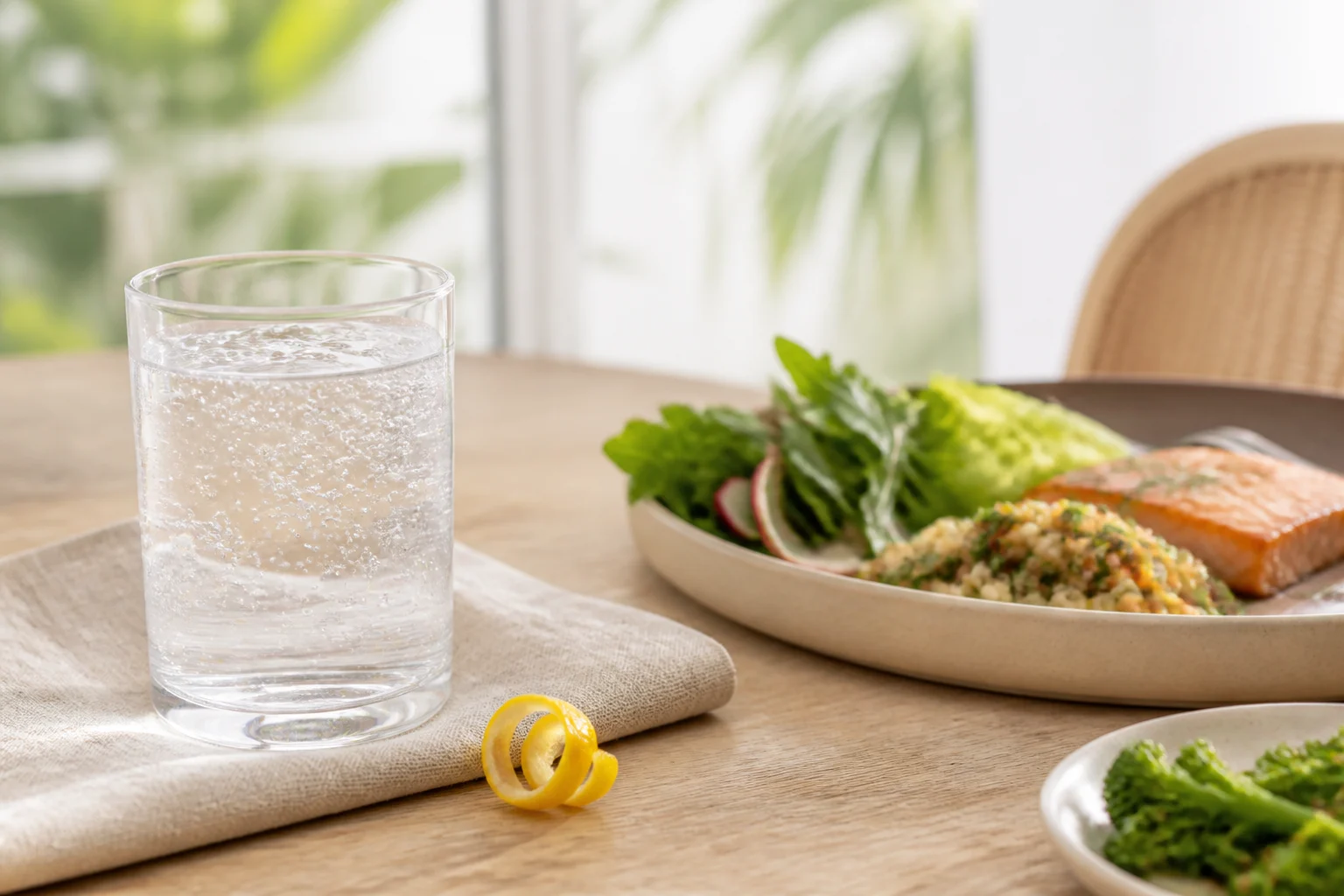
Carbonated water is water. The evidence concerns end there for most people: it hydrates equivalently, the mild acidity is a rounding error next to soft drinks, and the bone-loss worry belongs to cola, not bubbles. Its clearest health benefit is what it replaces — if fizz is what makes water interesting enough to displace a sugary drink, that swap is worth more than any mineral on the label.
Hydration: bubbles don’t change the water
The most direct evidence comes from the “beverage hydration index” work published in the American Journal of Clinical Nutrition (2016), which measured how well thirteen drinks hydrated adults against a still-water baseline. Sparkling water performed indistinguishably from still. Carbonation changes mouthfeel and how much you might comfortably drink in one sitting — it does not change what your body does with the water.
Teeth: the acid is real, the erosion mostly isn’t
Dissolving CO2 in water makes carbonic acid, which drops plain sparkling water to roughly pH 5 — mildly acidic, versus about pH 2.5 for cola. Laboratory erosion studies (including the often-cited work in the Journal of Oral Rehabilitation comparing mineral waters against soft drinks) measured sparkling mineral water’s effect on enamel at around one-hundredth that of the soft drinks tested. Dental associations consistently flag the same two real risks: flavoured sparkling waters, whose added citric acid is considerably more erosive than carbonic acid, and sipping anything acidic continuously across the whole day. Plain fizz with meals is not the problem.
Bones: that was cola, not carbonation
The “fizzy drinks weaken bones” worry traces largely to the Framingham Osteoporosis Study (2006), which found lower bone mineral density in older women who drank cola regularly — but no association for other carbonated drinks. The suspected culprits are cola’s phosphoric acid and caffeine, neither of which is in carbonated water. No study has linked plain sparkling water to bone loss.
Digestion: genuinely mixed, honestly minor
Small trials have found carbonated water can ease constipation and the sensation of indigestion in some groups, and swallowing studies have used cold carbonated water to improve swallow response. On the other side of the ledger: the gas has to go somewhere. People prone to bloating, reflux or IBS often find sparkling water makes those symptoms louder. This is the one section where individual variation beats any study — if bubbles bother your gut, that’s your answer.
Weight: the benefit is the substitution
Sparkling water has no calories, no sugar and no sweeteners, so its effect on weight is entirely about what it displaces. A can of soft drink swapped for a glass of fizz removes roughly 30–40 g of sugar. Some small studies suggest carbonation may slightly increase short-term fullness, but the honest framing is simpler: it makes plain water interesting enough to actually drink.
Does it matter what kind of sparkling water?
- Sparkling mineral water — natural spring water, legally required to state its mineral content; the calcium and magnesium are real but modest.
- Seltzer / carbonated water — plain water plus CO2. This is what HydroSpark+ makes. Nutritionally, it remains the filtered water you start with.
- Club soda — carbonated water with added sodium salts for taste; the sodium is small but nonzero.
- Tonic water — not water in any dietary sense: a standard bottle carries soft-drink levels of sugar.
In Singapore, tap water is already drinkable by national standards. HydroSpark+ adds four-stage reverse-osmosis filtration before chilling and carbonation, giving every sparkling glass a clean, consistent base. That is a taste decision more than a health requirement. See how HydroSpark+ handles the water.
Who should go easy on it
- Anyone with active reflux or GERD that bubbles aggravate
- IBS-prone drinkers, particularly during flare-ups — carbonation is a recognised trigger
- People advised to limit acidic drinks for dental reasons — and everyone should keep the flavoured, citric-acid versions as an occasional drink, not a default
The bottom line
For a healthy adult, sparkling water is one of the most benign things you can drink — the research consistently fails to find harm in plain carbonated water, and its practical benefit is displacing drinks that are demonstrably worse. If the fizz habit has you buying bottles weekly, the more interesting question is economic: what that habit costs per litre and whether HydroSpark+ fits your home.
This guide summarises published research for general information — it isn’t medical advice. If you have a condition affected by diet, your doctor beats our reading list.